
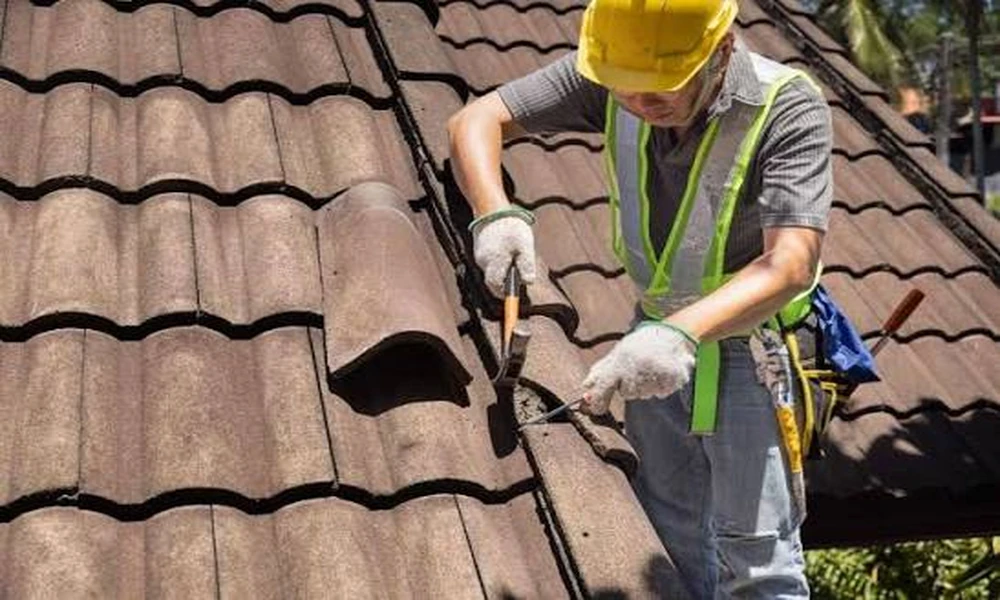
Three cracked tiles taught me more about roofing than any estimate ever did. I noticed them from the driveway on a Tuesday, waited eight months because nothing was leaking, and by the time I called someone, the underlayment beneath them had been sunbaked for two Florida summers. The tiles were a ten minute fix. The water damage inside was not.
That gap between visible damage and actual damage is where most homeowners lose money. Tile is one of the longest lasting roofing materials you can put on a house, and that longevity tricks people into thinking the roof takes care of itself. It doesn’t. What people call tile roof repair is usually the bill for something that could have been handled a year earlier, and the difference comes down to understanding what tile actually does versus what sits underneath it. If you’re comparing contractors for the work itself, it helps to look at what professional tile roof installation actually involves beyond laying tiles in neat rows.
Here’s the part that changes how you look at your own roof: the tiles are not the waterproof layer. They’re the shield. The barrier doing the real work is underneath them.
What’s Actually Holding Back the Rain
Under every field of tile sits a secondary water barrier, usually an underlayment membrane, and it is the component that keeps water out of your house. Tiles shed the bulk of the rain and take the sun damage so the membrane doesn’t have to. When a tile slips or cracks, the membrane underneath is suddenly exposed to UV, wind driven rain, and temperature swings it was never meant to handle alone.
That’s why a roof can look fine from the street and still be failing. You’re seeing the shield, not the barrier. Contractors who do this work professionally will tell you the same thing: the tile outlives the underlayment by a wide margin, and a lot of “tile roof repair” jobs are really membrane jobs with a tile reinstallation on top.
So when you’re staring up at your roof, the question isn’t “are the tiles pretty?” It’s “how old is what’s under them?”
A Maintenance Calendar I’d Actually Follow
Most roof care advice is vague enough to ignore. Here’s what I’d put on my own calendar.
| When | What to do | Why it matters |
|---|---|---|
| Twice a year | Walk the perimeter with binoculars. Look for slipped, cracked, or missing tiles and any tile that’s no longer sitting flush. | You catch exposed membrane before water reaches the deck. |
| After every major storm | Check the ground under downspouts and along the base of walls for tile fragments. | Broken tile in the yard means broken tile on the roof. |
| Once a year | Clear valleys, gutters, and any place debris collects. | Piled debris traps moisture and blocks drainage. |
| Every few years | Have someone qualified inspect the underlayment condition and the flashing at penetrations. | This is the layer that actually fails first. |
Notice nothing on that list involves climbing onto the roof in flip flops. Tile is brittle, the surface is slick when it’s wet, and walking on it wrong cracks tiles that were perfectly fine. Watch from the ground, then pay someone to go up.
Why Tile Roofs Fail Early (It’s Rarely the Tile)
When a tile roof fails before its time, the culprit is almost always one of a few things, and none of them are the clay or concrete itself.
- Bad flashing at penetrations. Vents, chimneys, and skylights are where water gets in first, because that’s where the roof has seams and transitions.
- Cheap or incorrectly installed underlayment. This is the single biggest factor in how long your roof actually lasts.
- Foot traffic damage. Satellite installers, solar crews, and well meaning homeowners crack tiles and don’t replace them.
- Debris and tree contact. Limbs rubbing a roof wear through the surface over years.
Here’s a comparison worth knowing if you’re choosing materials or evaluating what you already have.
| Material | Relative weight | Typical lifespan | Your main risk |
|---|---|---|---|
| Clay tile | Heavy | Decades | Brittleness and cracking |
| Concrete tile | Heavy | Decades | Color fade and cracking |
| Asphalt shingle | Light | Shorter | Granule loss and wind |
A tile roof adds real structural load, and that’s a design consideration, not an afterthought. Local building codes exist for a reason, and the National Fire Protection Association maintains the codes and standards many jurisdictions adopt, including fire and wind provisions that affect roof assemblies. If you’re retrofitting tile onto a roof that had shingles, get someone to check whether the structure was built for the weight before you fall in love with a color swatch.
Repair Now or Replace Later
This is the decision most homeowners get wrong, because they frame it as a cost question when it’s really a timing question.
Repair makes sense when the damage is isolated: a handful of cracked tiles, one bad flashing detail, a localized leak you caught early. Patch work is cheap relative to the alternative, and if the underlayment in that area is still sound, you’re done.
Replacement starts making sense when the underlayment is near the end of its service life across the whole roof, when you’re seeing multiple leaks in different areas, or when a repair estimate creeps toward a meaningful fraction of a full replacement. That last one is the practical trigger. If you’re spending serious money to fix one section of a roof that’s uniformly old, you’re paying twice for the same problem.
My take: when the underlayment is the issue, stop patching tiles. You’re renovating a facade.
The Three Questions That Save You Money
Before you sign anything, ask these.
- What’s the condition of the underlayment? If the answer is a shrug, that’s your answer about the contractor.
- How will you get on and off the roof without breaking tiles? A real answer involves walk boards or a plan, not “carefully.”
- What does the flashing detail at my penetrations look like? This is where leaks start and where shortcuts hide.
One more thing worth flagging: attic ventilation. Poor ventilation cooks the underside of a roof from the inside, and the U.S. Department of Energy covers how attic ventilation and insulation work together to manage heat and moisture in your home. Roofers fix the outside. Ventilation problems live on the inside, and they’ll shorten a roof’s life no matter how good the tile is.
What This Looks Like in Real Time
Picture a house with a twenty year old tile roof. Six tiles are cracked near a valley. No leaks yet. The homeowner gets two bids: one to replace the cracked tiles and one to replace the whole roof. Both are “correct” depending on what’s underneath. The honest move is to have someone check the underlayment in that section first, because that single inspection determines which bid is the right one. Skipping it means choosing between overpaying and underpaying, and neither one feels good when the ceiling stains show up.
Tile roofs reward attention and punish neglect, which is the opposite of what most people expect from a material that lasts this long. The upkeep is modest. The consequences of skipping it are not.
So go outside and look up. Count the tiles that don’t sit right. Then call someone qualified before the next rainy season does the inspection for you, because water is a patient contractor and it works for free.

Comments are closed.