
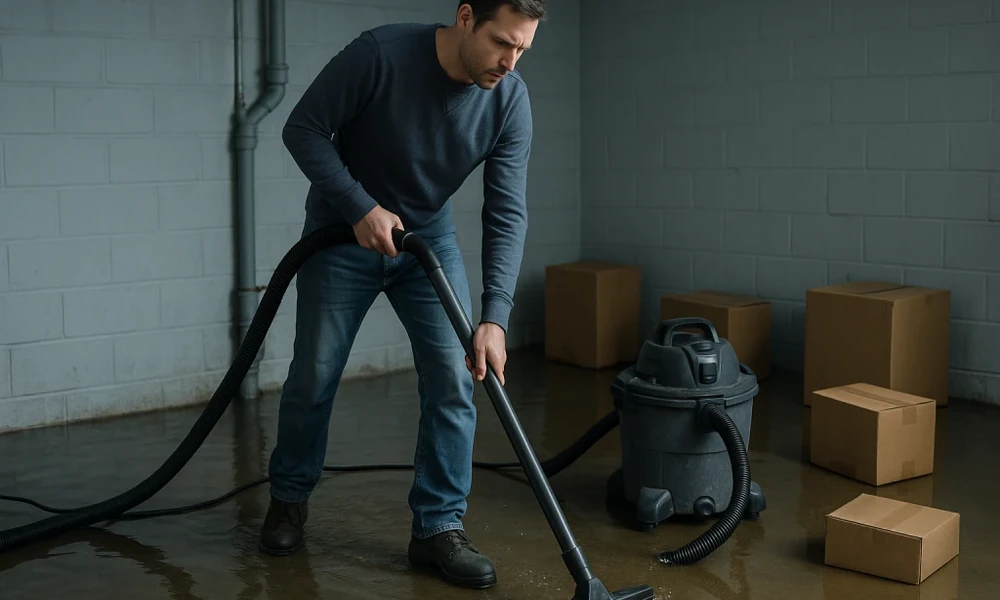
When someone is standing in an inch of cold water next to the furnace, they want one thing, and that is for the water to be gone. Yet the route the water took matters more than how deep it is. Anyone dealing with basement flooding in St Paul will notice that a good restoration crew, like the family owned team working out of County Road C West since 2009, starts with the same question before anything else. They offer a free assessment on water losses, handle the back and forth with insurance carriers, and usually reach a home within two to four hours. Even with that kind of speed, the first job is figuring out where the water came in.
The answer decides three things. It decides how contaminated the water is, how much of the basement has to be removed rather than dried, and who ends up paying for it. Most basements in the city have four doors that water can use, and each one leads to a very different outcome.
Up Through the Floor Drain
Water rising from a floor drain or bubbling out of a basement toilet usually means a sewer backup. That is the worst door of the four, because the water is treated as Category 3, the restoration industry’s term for grossly contaminated water. Carpet, pad, insulation and the lower portion of drywall that touched it are usually cut out and thrown away instead of dried.
In much of St. Paul, the cause sits under the front yard. Older homes often have clay tile sewer laterals, and the roots from boulevard trees find every joint. The city places that pipe squarely on the homeowner. According to the City of Saint Paul’s sewer guidance, property owners are responsible for their private sewer service all the way to the point where it connects with the city main. The city does offer a sewer assessment program that spreads repair costs over 20 years at a low interest rate, along with a deferred emergency loan for low income households.
Insurance is the second surprise. Many standard homeowners policies leave out sewer backup unless a separate endorsement was added, so it is worth checking that page of the policy before a storm.
In Through the Walls and Floor
A damp line along the bottom of a wall, wet mortar joints, or water seeping up through a crack in the slab points to groundwater. Thousands of St. Paul homes sit on block, limestone or fieldstone foundations built long before modern drain tile and waterproofing. When the soil around them gets saturated during a spring thaw or after a long rainy stretch, pressure pushes water through every weak spot.
Sump pump failures belong here too. A pump that quits during a summer power outage, or one with a stuck float switch, lets groundwater rise in the pit and spill across the floor. The water starts fairly clean but picks up soil and debris on the way in, so it usually lands in Category 2. Gradual seepage is commonly excluded from coverage, while a sudden pump failure may only be covered with a water backup endorsement.
Down Through a Window Well or Doorway
Surface water takes the most visible route. During a hard summer downpour, window wells can fill like buckets if their drains are clogged with leaves, and the glass eventually gives way or leaks around the frame. Downspouts that dump right next to the foundation, patios that slope toward the house and walkout doors at the bottom of a hill all invite water inside.
The clues are mud, leaves and grit on the floor beneath a window. In insurance language, water that flows over the ground and into a home is generally considered flood, which standard homeowners policies typically exclude. Coverage for it usually comes through a separate flood policy, such as one from the National Flood Insurance Program, and relatively few Twin Cities homeowners carry one unless their lender required it.
From Somewhere Inside the House
The fourth door is the one people overlook because it never touches the outside. A burst washing machine hose, a leaking water heater, a failed water softener or a supply line that froze along an exterior wall can all fill a basement. This water starts as Category 1, the cleanest classification, and sudden accidental leaks like these are the type most often covered by a homeowners policy. A slow drip that went unnoticed for months is a different story, since long term leaks are commonly excluded.
Four Doors Side by Side
| Where it came in | Usual water category | What often applies |
|---|---|---|
| Floor drain or toilet | Category 3 | Sewer backup endorsement |
| Walls, cracks or sump pit | Category 2 | Water backup endorsement, seepage often excluded |
| Window wells or doors | Category 2 or 3 | Separate flood policy |
| Plumbing or appliances | Category 1 | Standard policy if sudden |
Every policy is written differently, so this is a starting point for a conversation with an agent rather than a final answer.
Why Waiting Changes the Category
Even clean water does not stay clean. Once it sits on flooring, soaks into drywall and mixes with dust and whatever was stored on the floor, it can shift from Category 1 to Category 2 within a day or two. That same window is roughly when mold starts growing on wet materials. Fast extraction and drying protect the house, but they also keep the cleanup simpler and the claim smaller.
Reading the Clues Before Help Arrives
A few observations made in the first hour help a lot once the crew and the adjuster show up.
- Note where the water was deepest and whether it was rising from the drain or spreading from a wall or window.
- Take photos and video of everything before moving boxes or furniture.
- Stop running water and flushing toilets if the floor drain is involved, since every use adds to the backup.
- Shut off power to the basement at the panel only if it can be reached without stepping into water.
- Stay out of sewage and keep children and pets upstairs.
Closing the Door Behind It
Once the basement is dry, the source points straight to the fix. A camera inspection of the sewer lateral and a backwater valve address the floor drain. A battery backup sump pump and a check of the discharge line deal with groundwater. Window well covers, extended downspouts and regrading handle surface water. Braided steel washer hoses and a look at the age of the water heater cover the inside door.
So yes, it matters a great deal how the water got in. Knowing the door is what turns a frightening mess into a clear plan, and it is what keeps the next storm from coming through that same opening.

Comments are closed.