
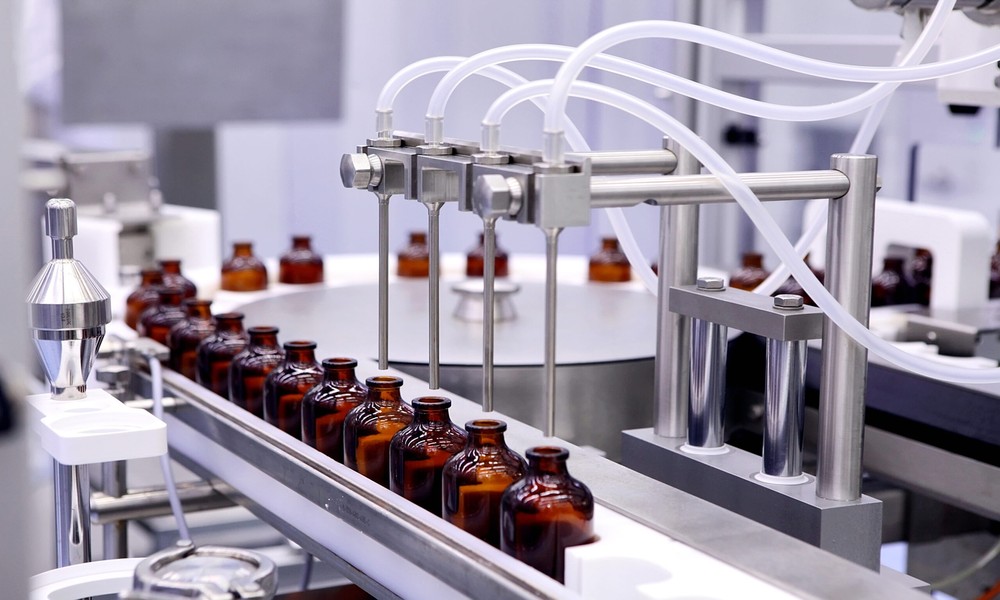
Any manufacturer weighing up a filling machine Singapore factories can rely on in 2026 is, whether they realise it or not, participating in one of the oldest industrial traditions in human history. The act of portioning liquids, powders, and pastes into standard containers traces back to ancient Mesopotamian grain measures and Roman amphorae. What has changed is not the purpose but the precision. A modern filling line on the mainland or in Jurong now hits tolerances once thought impossible, running at speeds that would astonish a nineteenth-century bottler. For Singapore’s food, beverage, pharmaceutical, and cosmetic manufacturers, the question is no longer whether to automate, but how wisely.
Why Singapore’s position matters
Singapore is not a cheap labour market, and it never will be again. That reality has pushed producers towards higher-value, higher-precision output for decades. Add to this the fact that Singapore sits at the heart of ASEAN’s trade flows and exports into markets as demanding as Japan, the EU, and the United States.
For manufacturers investing in a filling machine in Singapore, this context imposes specific pressures:
- Output standards must meet HSA, SFA, and international GMP requirements
- Labour scarcity makes automation a survival strategy, not a luxury
- Floor space is expensive, so compact footprints command a premium
- Export-oriented production demands traceability and data capture
Matching the machine to the product
Just as agricultural societies matched their tools to their soils, manufacturers must match their filling technology to the physical behaviour of what they are filling. A viscosity that flows easily at 25 degrees Celsius may thicken at warehouse temperature, and a powder that pours like water in Geneva may clump like cement in the humidity of Tuas.
Common filling technologies and their best uses:
- Piston fillers for thick sauces, creams, and pastes
- Gravity fillers for thin, free-flowing liquids such as water, juice, and spirits
- Pump fillers for medium-viscosity products and small-batch flexibility
- Auger fillers for dry powders, granules, and some sticky solids
- Net weight fillers for premium products where precise weight is the legal unit of sale
A common and costly mistake is buying a machine optimised for one product only to discover next year’s bestseller behaves entirely differently.
Throughput, accuracy, and the honest audit
Every salesperson quotes a headline figure. Real-world throughput is almost always lower, sometimes by thirty percent, once changeovers, cleaning, and minor stoppages are counted.
When evaluating filling machine singapore suppliers, ask for data on:
- Bottles or containers filled per minute under realistic conditions
- Fill accuracy expressed as a percentage or in grams of standard deviation
- Mean time between failures, based on genuine customer data
- Changeover time between product sizes or recipes
- Cleaning in place and sanitisation cycle duration
A machine rated at 120 bottles per minute that delivers 85 cleanly is worth more than one rated at 150 that stalls every twenty minutes.
Regulatory fit for Singapore and its export markets
Singapore’s regulatory environment is one of the tightest in Asia. Food and beverage producers answer to the Singapore Food Agency, pharmaceutical makers to the Health Sciences Authority, and electrical safety falls under EMA jurisdiction.
A liquid filling machine in Singapore destined for food or pharma use should demonstrably meet:
- 3A Sanitary Standards or EHEDG hygienic design principles for food contact surfaces
- 21 CFR Part 11 electronic records compliance for pharmaceutical exports to the US
- EU Machinery Directive compliance, usually evidenced by a CE mark
- IP65 or better enclosure ratings for washdown environments
- Validated stainless steel grades, typically 316L for product-contact parts
Total cost of ownership, not sticker price
The purchase price is usually between a fifth and a third of what the machine will cost to own over ten years. Like a domesticated animal, it must be fed and cared for long after the initial transaction.
Consider these line items:
- Electrical consumption under normal duty cycle
- Compressed air demand, which quietly becomes one of the largest running costs
- Annual preventive maintenance contract, typically 5 to 10 percent of capital cost
- Availability of spare parts in Singapore versus lead times from Europe or China
- Number of trained technicians in the country for that specific brand
Manufacturers often discover, too late, that a machine imported from a small European builder has a two-month parts lead time.
Integration, data, and the 2026 factory
The factory floor of 2026 is no longer a collection of isolated islands. It is a connected ecosystem, and any new filling line must speak the languages of the ones around it.
Look for:
- OPC UA or MQTT compatibility for MES and SCADA integration
- Ethernet-based controls rather than legacy serial connections
- Built-in vision systems for fill level and cap inspection
- Remote diagnostics for faster supplier support
- Clear data outputs for batch records and traceability
Export customers increasingly demand digital batch records as a condition of supply.
Making the decision
A wise investment serves not just the product being made today but the business being built for the next ten years. Factor in capacity headroom, regulatory durability, and the humble question of whether a local engineer can fix the machine on a Saturday afternoon. Treated as such, a filling machine singapore manufacturers will still rely on in 2036 is worth rather more careful thought than the lowest quotation on the table.

Comments are closed.