
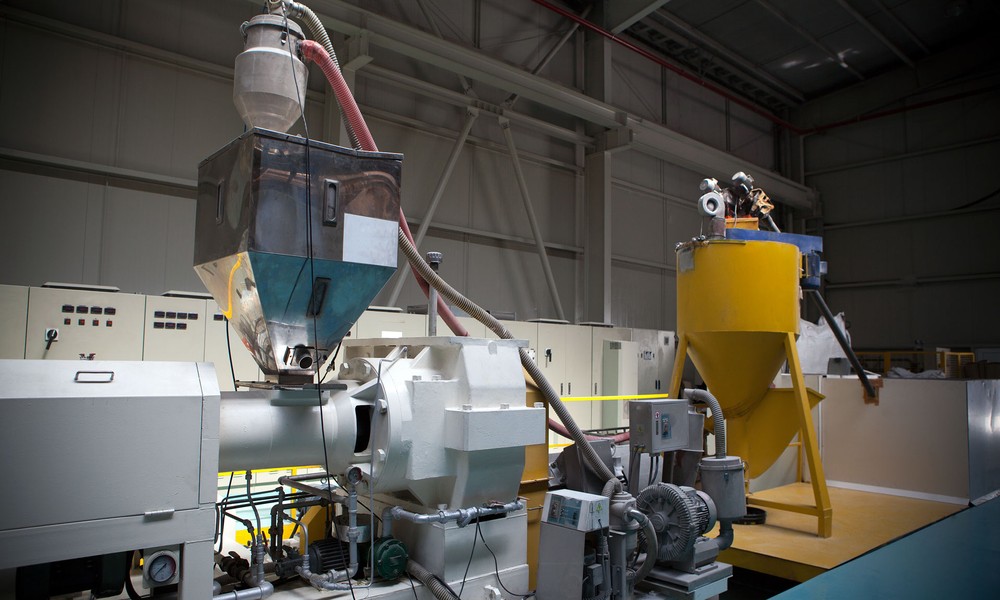
A metal injection molding manufacturer occupies a specific and quietly demanding position in the landscape of precision manufacturing. The process itself is not obvious. To look at the finished part, a stainless steel surgical component perhaps, or a hardened gear no larger than a thumbnail, gives no immediate indication of the journey that produced it. Feedstock was mixed. Tools were filled under pressure. Green parts moved through furnaces where binders burned away and metal particles fused at temperatures just below the melting point. What emerged was a component of near-net shape, dense and strong, dimensionally accurate to tolerances that most conventional machining would struggle to achieve economically at the same scale.
That journey, from powder to finished part, is the defining characteristic of metal injection moulding, and understanding it is the first step in evaluating the manufacturers who have made it their discipline.
The Process in Plain Terms
Metal injection molding begins with a feedstock, a carefully formulated mixture of fine metal powder and a thermoplastic binder system. This mixture is injection moulded into a tool cavity using equipment similar in principle to plastic injection moulding, producing what is called a green part. The green part then undergoes debinding, a process that removes most of the binder through solvent, thermal, or catalytic methods. What remains enters a sintering furnace, where controlled heat drives the metal particles to bond and the part to densify. Shrinkage during sintering, typically in the range of fifteen to twenty percent, is predictable and compensated for in the tool design.
The result is a fully metallic component with mechanical properties comparable to wrought material, produced in geometries that would require extensive secondary operations if approached through conventional machining.
Why Manufacturers Choose MIM
The question of when to specify a MIM manufacturer rather than a conventional machining or casting supplier is fundamentally a question of geometry, volume, and material. Metal injection moulding is at its most competitive when all three factors align:
- Complex three-dimensional geometry with internal features, thin walls, undercuts, or fine surface detail that would be costly to machine
- Production volumes in the range of tens of thousands to millions of parts annually, sufficient to amortise tooling investment
- Material requirements that call for high-performance alloys, including stainless steels, titanium, tool steels, or nickel-based superalloys
- Tight dimensional tolerances that casting alone cannot reliably achieve
When these conditions are present simultaneously, metal injection moulding typically outperforms the alternatives on cost, consistency, and geometric freedom. When they are not, the calculation changes.
What Separates Capable Manufacturers
Not all facilities that describe themselves as metal injection molding manufacturer operate at the same level of process maturity. The variables that determine capability are numerous, and most of them are not visible in a product catalogue.
Feedstock quality is foundational. The particle size distribution of the metal powder, the uniformity of binder incorporation, and the rheological behaviour of the resulting mixture all influence the dimensional consistency of the finished part. Manufacturers who formulate their own feedstock maintain a level of process control that those relying entirely on third-party supply may not.
Tooling precision matters considerably. Because sintering shrinkage must be compensated for in the tool geometry, the accuracy of the shrinkage prediction and the quality of the tool itself directly determine how closely the finished part matches its specification. Experience with a given material system accumulates over production runs, and manufacturers with long track records in specific alloys carry that knowledge in their process parameters.
Sintering furnace management is perhaps the least visible but most consequential variable. Temperature uniformity, atmosphere control, and thermal ramp profiles all influence the final density, microstructure, and mechanical properties of the sintered component. Manufacturers who invest in high-specification furnace equipment and monitor their processes rigorously produce more consistent output than those who treat sintering as a background operation.
Singapore’s Place in Global MIM Production
Singapore has developed a capable and well-regarded presence in the global metal injection moulding manufacturer landscape. The country’s precision manufacturing sector, which grew substantially through the electronics and aerospace industries, provided the engineering foundations and metrology culture that MIM production requires. Manufacturers based in Singapore serve customers across the medical device, aerospace, automotive, and electronics industries, often producing components to specifications that demand both dimensional precision and validated material properties.
The regulatory and business environment in Singapore supports the kind of long-term investment in process development that serious MIM manufacturing requires. Quality management systems aligned to ISO 9001 and, in medical applications, ISO 13485, are common among established manufacturers in the region. The country’s position as a regional logistics hub makes it a practical base for serving customers across Asia-Pacific who require reliable, traceable supply of precision-engineered metallic components.
Evaluating a Metal Injection Molding Partner
For engineers and procurement teams approaching MIM manufacturer selection, a few evaluation principles hold consistently:
- Request material certification data and compare reported mechanical properties against published specifications for the alloy in question
- Ask for dimensional capability studies on representative production parts, not just initial sample submissions
- Understand the manufacturer’s in-house versus outsourced scope, particularly for sintering and any secondary operations
- Clarify minimum order quantities and tooling amortisation terms before committing to a programme
The selection of a capable metal injection molding manufacturer is, in the end, a decision that shapes the quality, cost, and reliability of everything that follows.

Comments are closed.